
Author: Seth Thomas – 3 min read
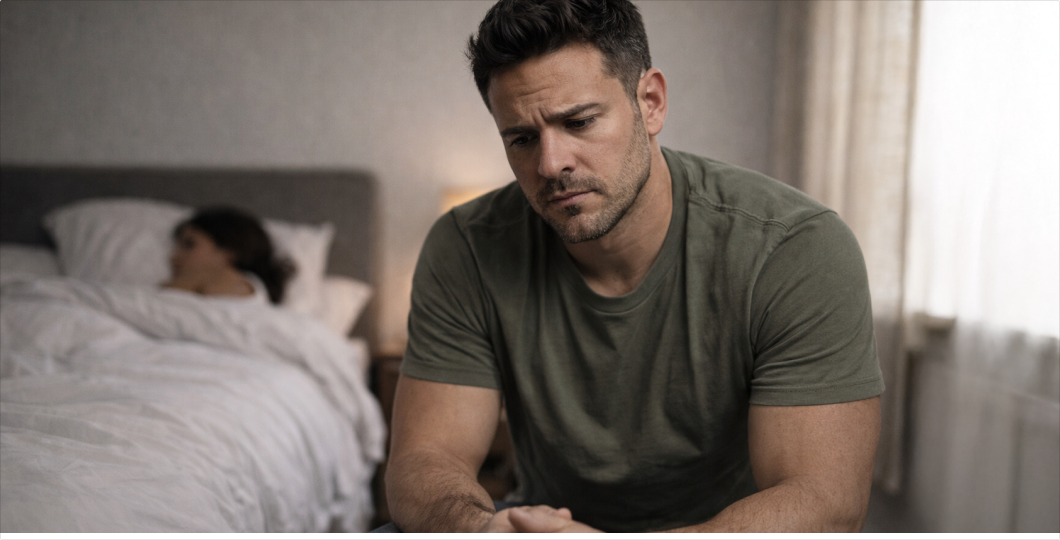
For many veterans and active-duty service members, erectile dysfunction (ED) doesn’t stem from a lack of desire. Attraction is still there. The relationship may feel solid. But the body doesn’t respond the way it used to.
When PTSD is part of the picture, this disconnect makes sense. PTSD changes how the brain and nervous system process safety, threat, and relaxation—three things that matter deeply for sexual response.
Understanding this connection can reduce shame and help veterans and their partners approach intimacy with more clarity and patience.
Sexual arousal requires a calm nervous system
Erections depend on the parasympathetic nervous system—the part responsible for rest, relaxation, and blood flow. PTSD keeps the body biased toward the sympathetic “fight-or-flight” response.
When the nervous system is on high alert, the body stays in a stress-response mode that prioritizes survival functions over relaxation and arousal, making sexual response more difficult even in safe environments.
“A body trained for threat has difficulty shifting into arousal.”
Hypervigilance disrupts erection and desire
Hypervigilance is a core feature of PTSD. It involves constant scanning for danger, heightened startle response, and difficulty fully relaxing.
This state directly interferes with sexual arousal. Instead of tuning into sensation, the brain stays alert, monitoring surroundings and internal cues. Over time, erections may become unreliable or short-lived—not because of low desire, but because the body never fully powers down.

Trauma affects both physical and emotional arousal
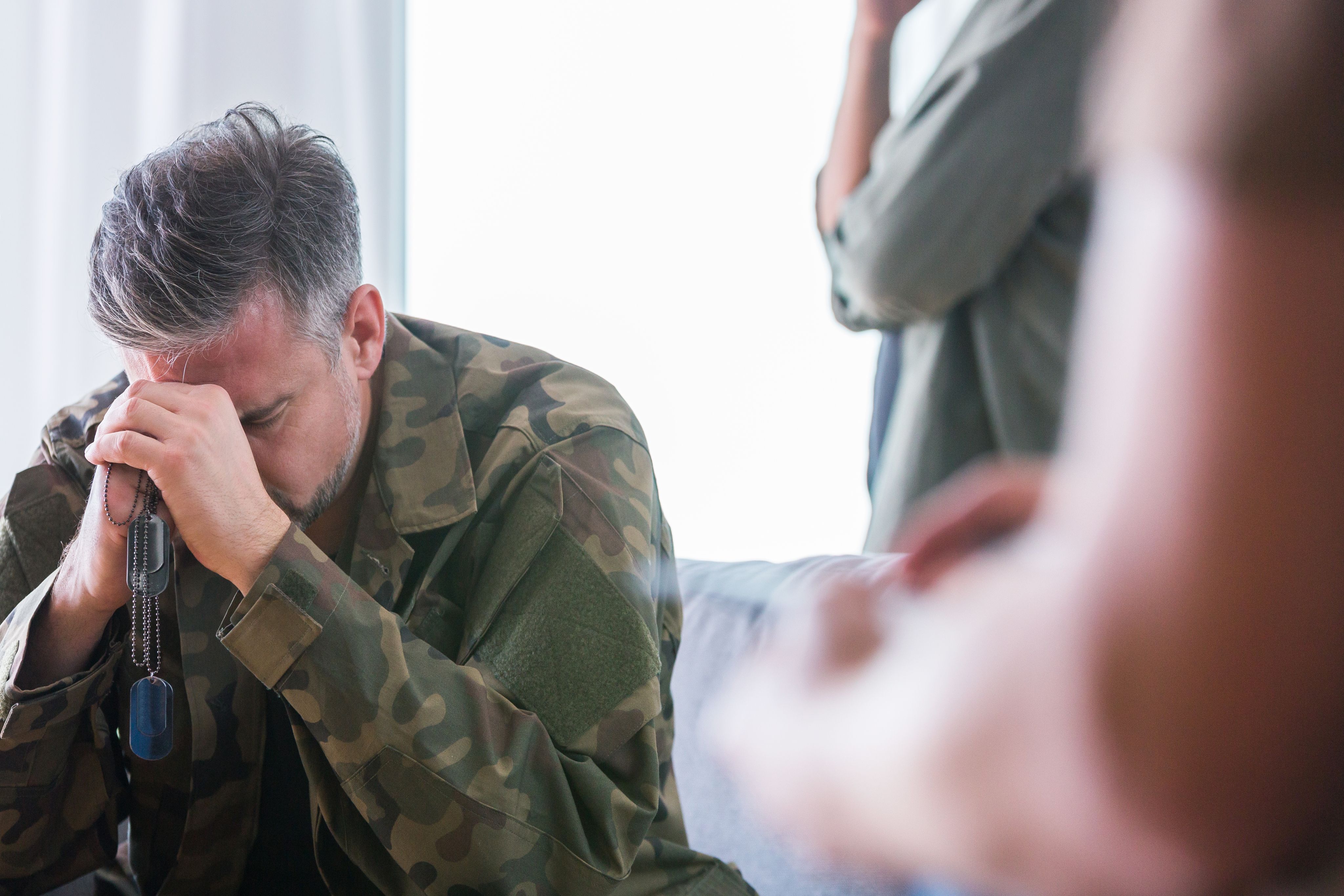
PTSD can also blunt emotional connection during intimacy. Some veterans report feeling detached, numb, or disconnected during sex, even when they care deeply about their partner.
This dissociation is a protective response. The brain limits sensation to avoid potential overwhelm. Unfortunately, this same mechanism can reduce arousal and interfere with erection quality.
Sleep disruption compounds the problem
PTSD is strongly associated with insomnia, nightmares, and fragmented sleep. Poor sleep affects testosterone production, vascular health, and nervous system regulation—all of which support erectile function.
Veterans with PTSD are significantly more likely to experience chronic sleep problems, which in turn are linked to higher rates of ED.
Medications can contribute—but aren’t the whole story
Many veterans with PTSD are prescribed SSRIs or other medications that can affect libido or erections. While medication side effects matter, they are rarely the sole cause.
In many cases, ED persists even when medications are adjusted, suggesting that nervous system dysregulation—not just chemistry—is playing a central role.
Why ED related to PTSD often feels unpredictable
One of the most frustrating aspects of PTSD-related ED is inconsistency. Erections may occur sometimes but not others, depending on stress levels, sleep, environment, or emotional load.
This unpredictability can increase anxiety and avoidance, which further reinforces the stress response and makes arousal harder to access over time.
“When arousal becomes unpredictable, anxiety often replaces curiosity.”
Approaches that support arousal without adding pressure
Managing PTSD-related ED often requires addressing the nervous system, not just the erection.
Helpful approaches may include:
- Trauma-informed therapy or CBT
- Sleep treatment and regulation
- Stress-reduction techniques
- Gradual, pressure-free intimacy
- Mechanical or wearable support that improves predictability without medication
The VA recognizes psychotherapy and nervous system regulation as key components of treating PTSD-related sexual dysfunction.
Talking about it with a partner helps more than silence
Avoiding the topic often increases misunderstanding. Partners may assume rejection or loss of attraction when the real issue is physiological stress response.
Couples who communicate openly about PTSD and sexual changes report lower distress and stronger emotional connection, even when symptoms persist.

The Takeaway
PTSD can interfere with erections and arousal because it reshapes how the nervous system responds to safety, stress, and intimacy.
This isn’t a failure of desire, effort, or masculinity. It’s a predictable physiological response to trauma. With understanding, support, and the right approach, many veterans regain confidence and connection—often without relying solely on medication.